
You look at an old photo and think, “Wait… my teeth used to be straighter.” You’re not imagining it. Even if you had braces as a teen, even if your bite feels “fine,” even if nothing hurts, your teeth can still drift over time. Orthodontists see it constantly: the lower front teeth start overlapping, little gaps open up, and your smile slowly changes. The American Association of Orthodontists (AAO) even calls out age-related shifting and crowding as a common change.
The sneaky part: this isn’t one single cause. It’s a bunch of small forces adding up over the years—kind of like a bookshelf that looks straight until one day you notice all the books leaning.
Let’s break down what actually makes crowding worse with age, then talk about how to stop it (yes, you can), including Ortho options like Invisalign, the real role of retainers, and where veneers fit in without doing something regrettable.
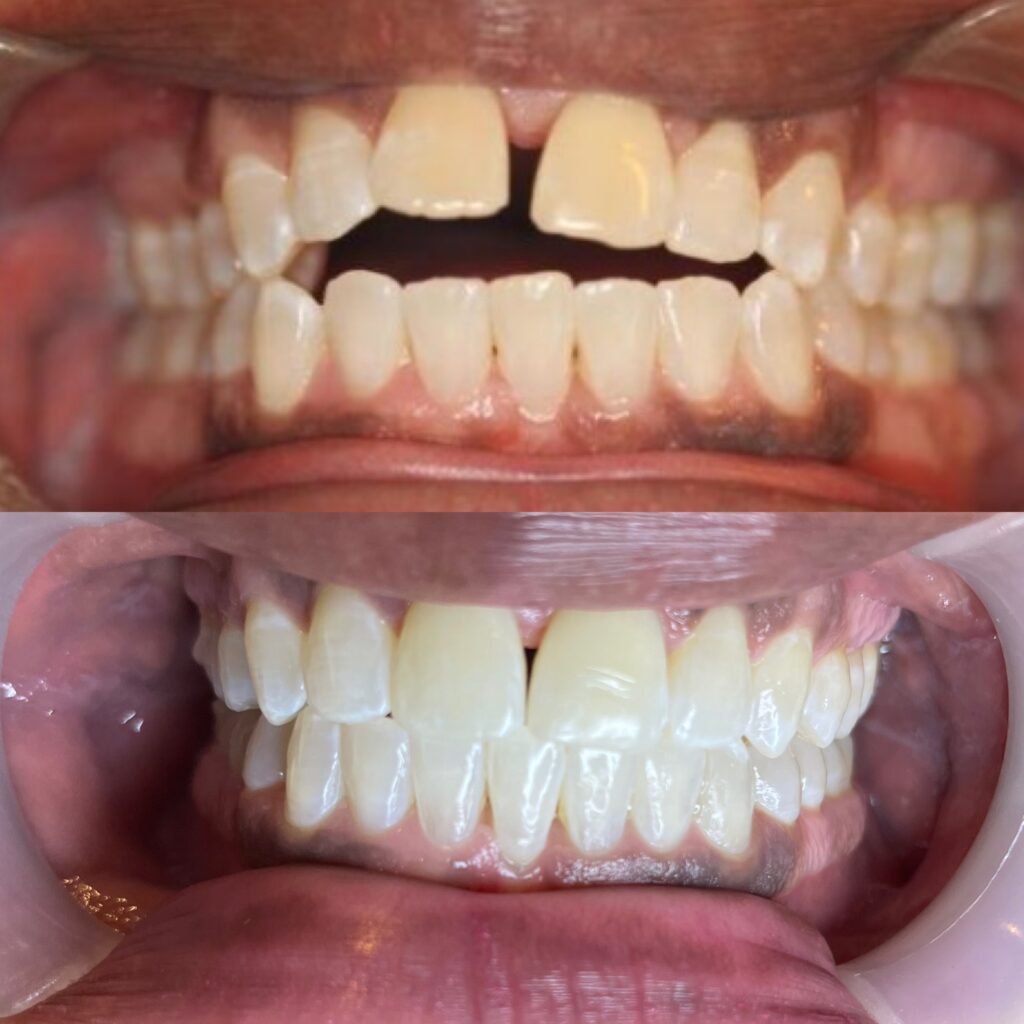
Why do teeth crowd more as you age?
Your teeth never “lock in” permanently
Teeth live in a dynamic system: bone remodels, ligaments stretch, and your bite loads your teeth every time you chew. That means “stable forever” doesn’t exist as a default setting. Teeth can shift naturally with time, and AAO notes that this shifting can lead to crowding (often in the lower front teeth) or spacing.
Your jaw can still change in adulthood
Most people think jaw growth ends in the teens. In reality, subtle changes can continue into adulthood. Even small forward/inward changes in the lower jaw and surrounding tissues can reduce space and encourage “late mandibular crowding” (that classic lower-front overlap adults notice). Ortho literature often describes this as part of normal maturation rather than a sudden “problem” you caused.
Tooth wear can trigger a slow domino effect
Here’s a weird one that most people never hear: when teeth wear down (from normal chewing, grinding, or clenching), they can drift slightly forward to maintain contact with neighboring teeth. Over time, that forward drift can steal space from the front of the arch and stack the lower incisors. Newer research continues to explore the relationship between wear and “tertiary crowding” (adult lower incisor irregularity).
Gum issues and bone loss change the “foundation.”
Healthy gums and bone hold teeth in the right positions. When gum disease (periodontitis) or chronic inflammation damages the support, teeth can migrate, flare, rotate, or spread. Some people assume gum problems only cause loosening, but shifting often shows up earlier than obvious looseness.
Missing teeth (or even small gaps) invite drifting
If you lose a tooth and leave the space open, nearby teeth often tip or drift into it. Even a small unaddressed gap can change the way your teeth contact each other, and your bite can start steering teeth into new positions. This also happens when a crown or filling changes the shape of a tooth and alters the contact points.
Wisdom teeth usually aren’t the villain people think they are
A lot of folks blame wisdom teeth for crowding. The evidence doesn’t support a simple “wisdom teeth push everything forward” story. Reviews and discussions in the orthodontic literature describe the relationship as controversial/uncertain rather than a clear cause-and-effect.
So if someone promises, “Remove wisdom teeth and your crowding will stop,” that claim needs a reality check. You should evaluate wisdom teeth for infection, decay, cyst risk, gum issues, or pain—but not as a guaranteed crowding fix.
If you had braces before, relapse loves a missing retainer
This one’s brutally common: teeth move back toward old positions when you stop wearing retainers. And teeth don’t stop moving just because you “finished treatment.” AAO says many people need a retainer for life (often nightly, long-term) if they want to keep alignment.
Even Invisalign says you need retainers after aligners to prevent relapse.
How to stop crowded teeth from getting worse
1) Treat the cause, not just the symptom
If gum inflammation drives the movement, straightening alone won’t fix the underlying instability. If grinding drives wear, teeth may keep shifting unless you manage the grinding. Good Ortho starts with a diagnosis: gums, bite, airway habits, wear patterns, and spacing.
A solid first step: ask your dentist or orthodontist to tell you why your teeth moved—not just how to move them back.
2) Use retainers like you mean it
Retainers aren’t an optional “afterthought.” They’re the part that makes your results last.
AAO’s guidance is blunt: many patients need lifelong retention, even if wear time decreases.
Invisalign also emphasizes retainers after treatment to prevent relapse.
Practical tips that actually help people stick with it:
- Pair retainer wear with a nightly anchor habit (brush/floss → retainer goes in).
- Replace retainers when they feel loose, crack, or warp. A “sort of fitting” retainer invites drifting.
- Keep a backup retainer if you can. Losing one for even a couple of weeks can undo progress fast.
3) Consider Invisalign or other Ortho options before things worsen
For many adults with mild-to-moderate crowding, Invisalign (clear aligners) can straighten teeth discreetly. For more complex bite issues, traditional braces or other orthodontic approaches may work better.
The important idea: orthodontics can create space and align teeth conservatively, often avoiding aggressive enamel shaving or cosmetic shortcuts. And when you finish, you lock it in with retention—otherwise you’re renting straight teeth, not owning them.
4) Protect your teeth if you grind or clench
If you wake up with jaw tension, headaches, or flattened/chipped edges, you might grind at night. Grinding can accelerate wear and push your bite into positions that encourage crowding. A dentist can evaluate this and discuss a night guard or other strategies.
This isn’t just about comfort. It’s about stopping the mechanical forces that keep rearranging your smile.
5) Fix “space problems” early (missing teeth, bad contacts, old dental work)
Crowding sometimes worsens because your teeth come into contact. If a tooth has a poor contact after a filling/crown, or if a missing tooth leaves a gap, your teeth may drift to “close the loop.” When you restore proper contacts and replace missing teeth appropriately, you remove a big reason teeth wander.
6) Keep gum health boringly excellent
Crowding and gum issues feed each other: crowding makes cleaning harder, and inflammation makes teeth less stable. Regular cleanings, daily flossing (or interdental brushes), and addressing bleeding early can keep the foundation strong.
Where veneers fit (and where they don’t)
Veneers can mask mild crowding by changing the visible shape of teeth. They can make a smile look straighter without moving teeth much.
But veneers don’t correct the underlying alignment or bite forces. If you place veneers on crowded teeth without addressing the cause, you can end up with:
an unnatural, bulky look (because the teeth still sit crooked underneath),
bite conflicts (which can chip veneers),
and more work later if crowding continues.
Many cosmetic dentists prefer this sequence when you need both: Ortho first (often Invisalign), veneers second for shape/color refinement. That approach keeps things conservative and stable long-term.
A simple “stop it from getting worse” plan
You don’t need to do everything at once. You do need momentum.
- Get an evaluation with a dentist or orthodontist (photos, scans, gum check, bite check).
- Decide whether you need Invisalign/Ortho now or just retention/monitoring.
- Commit to retainers long-term if you straighten—because teeth always try to wander.
- Address grinding, gum inflammation, and missing-tooth spacing so the drift doesn’t restart.
Crowding with age doesn’t mean you “failed” at taking care of your teeth. It means your mouth behaves like a living system, not a static sculpture. Once you understand the forces, you can counter them—usually with less effort than you think, as long as you don’t skip the unglamorous hero of the story: retainers.