
Missing teeth can affect more than your smile.
They can change the way you chew, speak, and feel in everyday situations. Even one missing tooth can make you more careful when eating. Several missing teeth can make you avoid certain foods completely. Missing teeth can also change your facial structure and make you look older.
That is why many patients compare dental implants vs dentures when they want to replace missing teeth.
Both options can work well. Both can improve your smile and restore function. But they are very different when you look at comfort, stability, bone health, maintenance, and long-term value.
So, which one is better long term?
For many people, dental implants are the stronger long-term option because they feel more stable, help protect the jawbone, and can last many years with proper care. Dentures can still be a good solution, especially when cost, health, or timing matters.
The right choice depends on your mouth, your budget, your health, and your goals. A dentist can help you compare your options after an exam. You can also visit Hollywood Dentist to learn more about treatment options and schedule a consultation.
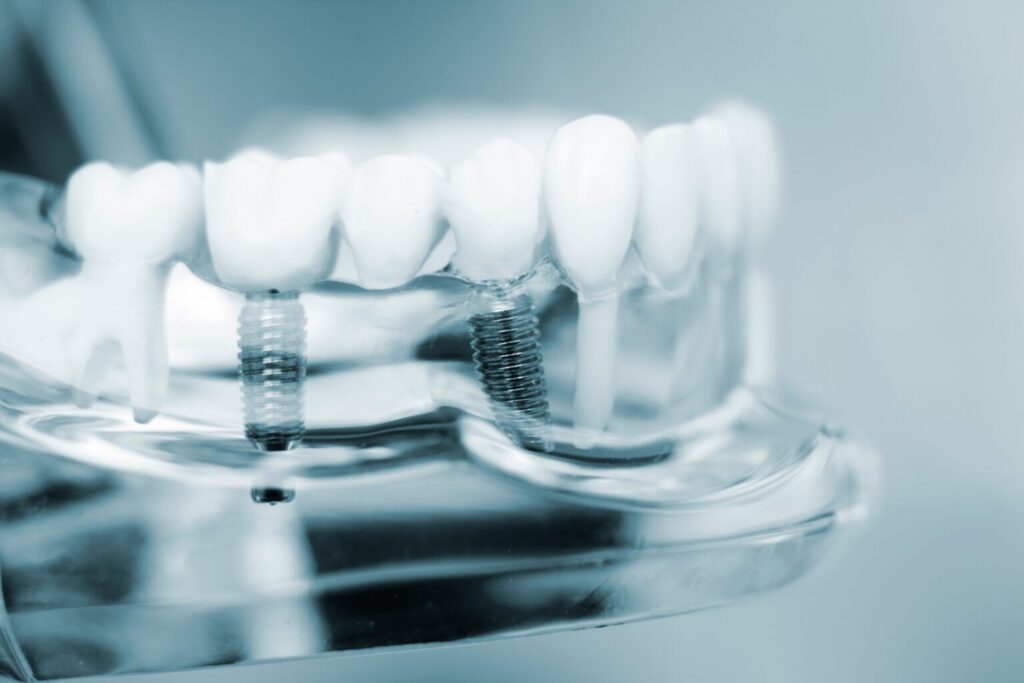
What Are Dental Implants?
Dental implants replace missing tooth roots.
A dentist or specialist places a biocompatible post into the jawbone. After healing, that post can support a crown, bridge, or denture. Dental implant surgery replaces tooth roots with metal posts and uses artificial teeth that look and work much like real teeth.
That root replacement is the big difference.
A regular denture sits on top of the gums. An implant connects with the bone. Because of that, implants often feel more secure when you chew, talk, or smile.
Dental implants can replace one tooth, several teeth, or a full arch of teeth. Some patients get one implant with one crown. Others get implant-supported dentures for a full smile replacement.
What Are Dentures?
Dentures are removable appliances that replace missing teeth.
A full denture replaces all teeth in the upper or lower jaw. A partial denture replaces several missing teeth while some natural teeth remain.
Dentures rest on the gums. Some use suction, clasps, or adhesive to stay in place. Others attach to dental implants for better support.
Traditional dentures have helped patients for a long time. They can restore appearance, improve basic chewing, and usually cost less upfront than implants.
But they do not replace tooth roots. That matters when you think about long-term comfort and jawbone health.
The Main Difference Comes Down to Stability
The biggest everyday difference between dental implants and dentures is how they feel in your mouth.
Dental implants stay fixed in place. Once the implant heals and the final tooth is attached, it usually feels closer to a natural tooth. You do not remove it at night. You do not use adhesive. You brush and care for it like part of your smile.
Dentures can move, especially lower dentures. They may shift when you eat, laugh, or speak. A good fit helps, but the jaw and gums can change over time.
That does not mean dentures are bad. Many people wear them comfortably. But if you want something that feels more secure and natural, implants usually have the advantage.
Which One Lasts Longer?
Dental implants usually last longer than traditional dentures.
The American Dental Association describes implants as a long-term option for restoring a smile and notes that they are designed to blend with natural teeth.
The average denture lasts about seven to ten years, and most people need replacement dentures at that point. Dentures may also need relining every one to two years as the mouth changes.
That is one reason implants often win the long-term value conversation.
Dentures may cost less at the beginning, but they can need adjustments, relines, repairs, and replacements. Implants usually cost more upfront, but they can provide a longer-lasting foundation.
Bone Health Is a Big Factor
When you lose a tooth, the jawbone no longer gets the same stimulation from chewing.
Over time, the bone in that area can shrink. This can affect your bite, face shape, and future dental options.
Dental implants help with this because they act more like natural tooth roots. Implants help prevent bone loss that can happen after tooth loss.
Traditional dentures do not stimulate the jawbone in the same way. They actually cause bone loss over time. That’s why it’s important that if you’re using a denture as a temporary fix before you get implants, you don’t wait more than a few years to get the implants..
This is why dentures can start to feel loose after years of wear. The denture itself may not be the only problem. The shape of the gums and bone underneath may have changed.
That is also why some people who have worn dentures for years eventually look into implant-supported dentures.
Chewing Power Feels Different Too
Most people want replacement teeth that let them eat normally again.
Dental implants usually provide stronger chewing support because they connect to the jawbone. Patients often feel more confident eating foods like steak, apples, nuts, and crunchy vegetables after they adjust to their implants.
Dentures can improve chewing, but they usually do not feel as strong as natural teeth or implants. Some foods may feel harder to manage. Sticky, hard, or chewy foods can move the denture or create sore spots.
This can affect nutrition, too.
When people avoid harder foods, they may eat fewer fresh fruits, vegetables, proteins, and high-fiber foods. Comfort matters because it changes what you choose to eat every day.
Dentures Are Usually Faster
Dentures can often be made faster than implants.
This makes them helpful when someone needs teeth replaced quickly or does not want surgery. Dentures can also work well as a temporary solution while someone waits for implants.
Dental implants take more time.
The implant needs to heal and bond with the bone before the final crown or denture gets attached. Some patients also need bone grafting before implant placement. That can add more time.
So if speed matters most, dentures may be the easier starting point.
If long-term stability matters most, implants usually deserve serious consideration.
Cost Is Not Just About the First Price
Dentures usually cost less up front.
That makes them attractive for many patients. If someone needs to replace many teeth and wants a lower initial cost, dentures may feel more realistic.
Dental implants cost more upfront because they involve surgery, planning, materials, and custom restorations.
But long-term value works differently.
A denture may need relines, repairs, or replacement over the years. Implants may require a larger investment at first, but they may last much longer when properly cared for.
The better question is not only, “Which one is cheaper today?”
The better question is, “Which one will give me better comfort, function, confidence, and durability over the next 10, 15, or 20 years?”
For many patients, implants make more sense when viewed that way.
Maintenance and Daily Care
Dental implants are cared for much like natural teeth.
You brush, floss, and visit the dentist regularly. You still need excellent hygiene because gum problems can affect implants. Implants do not get cavities, but the gums and bone around them still need care.
Dentures need a different routine.
You usually remove them at night. You clean them outside your mouth. You may need soaking solutions, adhesives, and periodic adjustments.
Some patients like the removable nature of dentures. Others find it inconvenient.
If you want the lowest-maintenance feel in daily life, implants usually feel more natural.
Appearance and Confidence
Both dental implants and dentures can look good.
Modern dentures can look much more natural than older styles. A well-made denture can support the lips, restore the smile, and improve facial appearance.
Implants often look and feel more natural because they stay in place. They do not slip when you laugh. They do not come out at night. They can give patients more confidence in social situations.
For front teeth, this can matter a lot.
People want to smile without thinking about their teeth. They want to speak without worrying about movement. They want to eat in public without feeling nervous.
That emotional comfort is part of the long-term value, too.
Who May Be Better for Dentures?
Dentures may be a better choice if you want a more affordable starting option.
They may also work well if you are not a good candidate for surgery, have significant bone loss, or need teeth replaced quickly.
Some patients choose dentures first and upgrade later. Others choose dentures because they simply prefer a removable option.
There is nothing wrong with that.
A good denture can still improve the quality of life. The key is making sure it fits well and gets adjusted when your mouth changes.
Who May Be Better for Dental Implants?
Dental implants may be better if you want a long-term solution that feels more secure.
They may be a good fit if you have healthy gums, enough jawbone, and good overall health. They may also work well if you want a stronger chewing ability and do not want removable teeth.
Implants can be especially helpful for people who feel frustrated with loose dentures.
Some patients do not need a full mouth of individual implants. Implant-supported dentures can use a smaller number of implants to support a full arch. That can give much better stability than traditional dentures.
A dentist can tell you which option fits your mouth best. For a personal evaluation, you can contact Hollywood Dentist and ask about tooth replacement options.
What About Implant-Supported Dentures?
Implant-supported dentures sit between traditional dentures and full dental implants.
They still replace a full set of teeth, but they attach to implants instead of resting only on the gums. This gives them better stability.
Cleveland Clinic explains that implant-supported dentures can help prevent jawbone loss, look natural, and avoid slipping the way traditional dentures can.
This can be a strong option for patients who need full-mouth replacement but want more support than regular dentures provide.
Some implant-supported dentures snap in and out. Others stay fixed and can only be removed by a dentist.
This option can give patients a more secure smile without replacing every missing tooth with a separate implant.
So, Which Is Better Long Term?
For most patients, dental implants are better in the long term.
They offer stronger stability, better chewing support, and better jawbone protection. They also tend to last longer than traditional dentures when patients care for them properly.
But dentures still have a place.
They can be more affordable, faster, and less invasive. They can also help people who cannot get implants right away.
The best choice depends on your situation.
If you want the most natural feel and the strongest long-term function, implants usually come out ahead. If you need a lower upfront cost or a removable solution, dentures may be the better fit.
The Bottom Line
Dental implants and dentures both replace missing teeth, but they do not work the same way.
Dentures sit on the gums. Implants replace the roots and support the new teeth from the jawbone. That one difference affects comfort, chewing, bone health, maintenance, and long-term value.
If you want a solution that feels closer to natural teeth, dental implants are usually the better long-term choice.
If you want a faster or more budget-friendly option, dentures can still be a practical solution.
The smartest move is to get an exam and compare your options based on your mouth, not a general answer online. To discuss dental implants, dentures, or implant-supported dentures, contact us and schedule a consultation.
Also read: How Long Do Veneers Last? Everything You Need to Know Before Getting Them